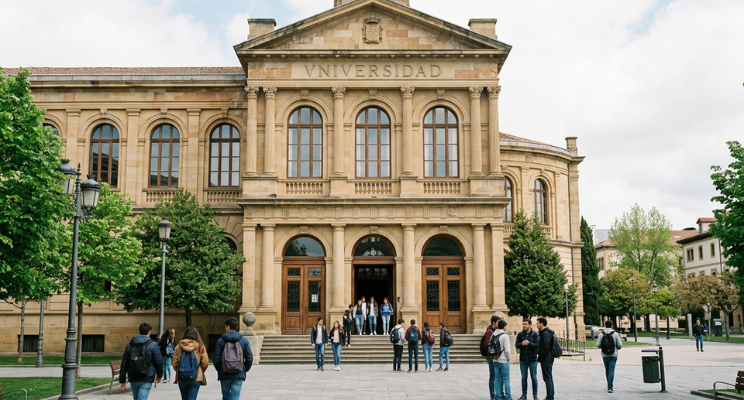
Student Visa Spain Overview: What International Students Usually Need
Updated: Jun 24
If you are planning to study in Spain, the student visa is often the first major administrative step. The exact requirements can vary depending on your nationality, the Spanish consulate handling your case, and the type and length of your studies. This guide gives you a clear student visa Spain overview: the usual documents, the basic requirements most applicants should expect, and the common mistakes that cause delays or refusals.
Quick Answer
· You usually need an admission letter from a recognized school or university in Spain.
· Your passport should be valid for the full visa process; Campus Spain recommends at least 15 months of validity from the course start date.
· For financial proof, the rule is usually 600 € per month of study, but Campus Spain recommends showing at least double that amount.
· It is very important to prove the source and origin of the sponsor’s funds, not just the balance.
· Requirements can change by country, consulate, and program type, so always check the official instructions for your case.

Main documents students are usually asked for
Most student visa applications for Spain are built around a similar set of documents. The exact list can change, but the following items are commonly requested.
Proof of admission
You normally need an official acceptance letter or enrollment confirmation from the Spanish institution. This document should clearly show the name of the program, the study dates or duration, and the institution’s details.
Valid passport
Your passport should usually be valid for the full period required by the consulate. Campus Spain recommends that the passport have at least 15 months of validity counted from the date of the visa application, as this helps avoid potential issues if the visa process takes longer than expected or if the stay is extended.
Proof of financial means
Students are generally expected to show that they can support themselves during their stay. The usual rule indicates a minimum of €600 per month for each month of the course, but Campus Spain strongly recommends proving the highest amount of financial resources possible whenever feasible, as stronger financial evidence can significantly improve the chances of visa approval.
It is also essential to show the source and origin of the sponsor’s resources. Consulates often want to understand not only how much money is available, but also where it comes from and how the sponsor can legitimately support the student.
4. Health insurance
Many applicants need private health insurance that covers them in Spain and meets the conditions set by the consulate. The policy requirements can differ, so it is important to verify whether the insurance must be full coverage, with no deductibles, or valid for the entire stay.
5. Criminal record certificate
Depending on your age, nationality, and length of stay, you may be asked for a criminal record certificate from the countries where you have lived recently. This document often needs to be recent and may require legalization or an apostille, depending on the issuing country.
6. Medical certificate
Some applicants must provide a medical certificate stating that they do not suffer from any disease that could have serious public health implications under the applicable rules. The wording and format can matter, so it is important to use the version accepted by the consulate.
7. Visa application form and photos
You will usually need to complete the official visa form and submit passport-sized photos that meet the required specifications. Small errors in the form or photo format can create unnecessary delays.
Basic requirements beyond the paperwork
A student visa is not only about collecting documents. Consulates also look at whether your application is coherent and whether your study plan makes sense.
Clear study purpose
Your course or program should match your academic background or future goals in a reasonable way. If the study plan seems inconsistent, the consulate may ask for more explanation.
Accommodation and stay planning
Some applications may require proof of where you will live in Spain, or at least a credible plan for accommodation. This can be a university residence, rental agreement, or another accepted form of housing evidence, depending on the case.
Document consistency
Names, dates, addresses, and program details should match across all documents. Inconsistencies are a common reason for requests for correction or additional evidence.
Document | Why it matters | Common issue |
Admission letter | Shows the purpose of travel | Missing dates or unclear program details |
Passport | Confirms identity and travel validity | Expired or nearly expired passport |
Financial proof | Shows ability to cover living costs | Insufficient or unclear bank records |
Health insurance | Demonstrates medical coverage | Policy does not meet consulate conditions |
Criminal record certificate | Supports background verification | Outdated or not properly legalized |
What usually causes delays or refusals
Even strong students can face problems if the paperwork is incomplete or not prepared in the right format. The most frequent issues are often simple, but they can have a big impact.
Missing translations or legalization
Some documents must be translated into the required language and may also need legalization or an apostille. The exact rule depends on the document and the country that issued it.
Wrong insurance coverage
Many applicants assume any travel insurance is enough, but consulates often require a policy with specific coverage conditions. A policy that looks acceptable at first glance may still be rejected.
Weak financial evidence
Bank statements that are too recent, unclear, or inconsistent can raise doubts. If the funds come from a sponsor, the relationship and support documents should be easy to understand, and the origin of the money should be clearly traceable.
Applying too late
Because processing times vary, leaving the application to the last minute can create avoidable stress. This is especially risky if you still need translations, certificates, or appointment availability.
Common mistakes: submitting documents in the wrong format, using an insurance policy that does not meet the requirements, forgetting translations or legalization, and assuming the same checklist applies everywhere. In reality, the consulate’s instructions always come first.
How to read the requirements without getting lost
The best way to approach a student visa application is to treat the official checklist as a framework, not as a universal template. Your nationality, the consulate where you apply, and the length of your studies can all affect what is required.
Check the source that controls your case
Always prioritize the instructions from the Spanish consulate or embassy responsible for your application. University guidance is useful, but it does not replace the official visa rules.
Prepare for extra documents
It is common for consulates to request additional evidence if something is unclear. Having organized copies of your academic records, accommodation plan, and financial documents can make the process smoother.
Keep your story consistent
Your application should tell one clear story: who you are, what you will study, how you will support yourself, and where you will stay. When these elements align, the application is usually easier to assess.
For many students, the challenge is not one single document but the combination of several small requirements. A complete and consistent file is often stronger than a rushed one with missing pieces.

Frequently Asked Questions
Do all international students need the same documents for a Spain student visa?
No. The general list is similar, but the exact requirements depend on your nationality, the Spanish consulate, and the type of studies you will do. Some applicants are asked for extra documents, while others may have a shorter checklist.
Is health insurance always required?
In most cases, yes, but the required type of insurance can vary. Some consulates are strict about coverage, deductibles, and validity period, so it is important to confirm the exact conditions before buying a policy.
Do I need a criminal record certificate for a student visa?
Often yes, but not always in every situation. Whether it is required can depend on your age, the length of your stay, and the consulate’s rules. If it is needed, it may also have to be legalized or apostilled.
Can I use bank statements from a sponsor or family member?
Often yes, if the consulate accepts sponsor-based financial proof. In that case, you usually need clear supporting documents showing the relationship, the sponsor’s ability to cover your stay, and the origin of the funds.
What is the most common reason student visa applications get delayed?
Incomplete or inconsistent paperwork is one of the most common reasons. Missing translations, incorrect insurance, or unclear financial proof can all slow the process down.
If you are preparing your application and want to avoid common paperwork problems, Campus Spain can help you understand what usually matters most for your case. We support international students through the academic and administrative process so they can focus on studying in Spain with less stress.
Related guides
If you are preparing to study in Spain, these guides can help you understand the academic and admission steps before applying for a student visa:
Study in Spain as an International Student: Universities, Admission, Visa and Pathways
Spanish LCA: A Guaranteed Pathway to Higher Education in Spain
When to Apply to Universities in Spain as an International Student
Bachelor’s Degree in Spain: Requirements for International Students
How to Choose a University in Spain as an International Student
© 2026 Campus Spain. This article is original content created by Campus Spain. Reproduction, redistribution, translation, adaptation or use of this content for commercial purposes is not permitted without prior written authorization.